Everyone Learns Differently: That’s Why Waldorf Works
At Richmond Waldorf School, we begin with a simple truth: children don’t all learn the same way. Some take in the world through images and color, while others latch onto stories and spoken language. Some make sense of things best when they can write or draw, and some need to move, build, or touch in order to understand.
These differences reflect the four commonly described learning styles — visual, auditory, reading/writing, and kinesthetic — and they show up clearly in every classroom. When teaching focuses too narrowly on one style, some children naturally thrive while others struggle. Waldorf education takes a broader, more inclusive approach. Our teachers intentionally create multiple entry points into each lesson so that every learner has a path toward understanding.
Understanding Different Ways of Learning
Research into learning styles has helped educators describe tendencies we’ve long observed in real children:
-
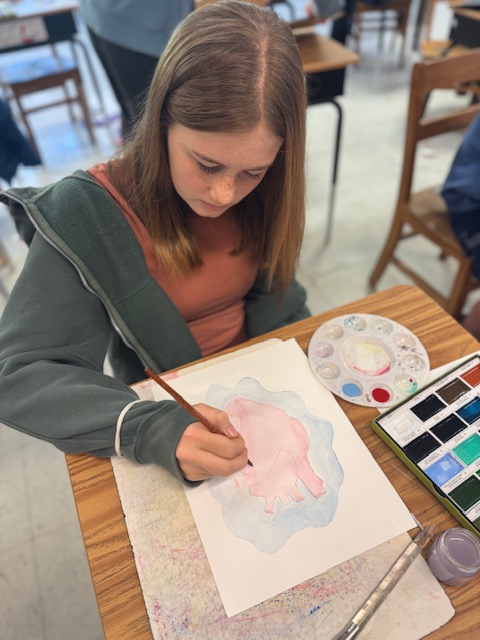
Visual learners absorb information best through images, diagrams, color, and spatial relationships.
-
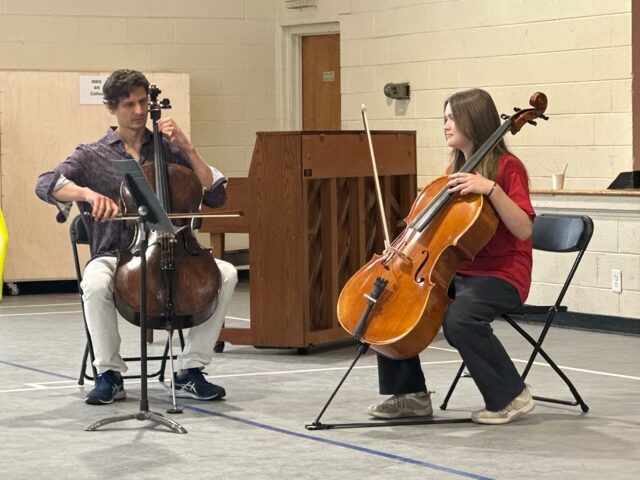
Auditory learners understand through spoken language — lectures, stories, songs, and conversation.
-
Reading/Writing learners retain information when they can read text, take notes, or express ideas through writing.
-
Kinesthetic learners learn most deeply by doing — through movement, touch, hands-on exploration, and physical engagement.
While no model captures every nuance of how the brain works, these categories help us honor the diverse ways children make meaning.
How Waldorf Brings Learning to Life
Walk into any RWS classroom and you’ll notice right away that learning is active and multisensory. A single lesson might engage all four learning styles at once:
-
Auditory: A story told aloud, rich with rhythm, language, and imagery
-
Visual: Chalkboard drawings, watercolor paintings, or diagrams created by the teacher or students
-
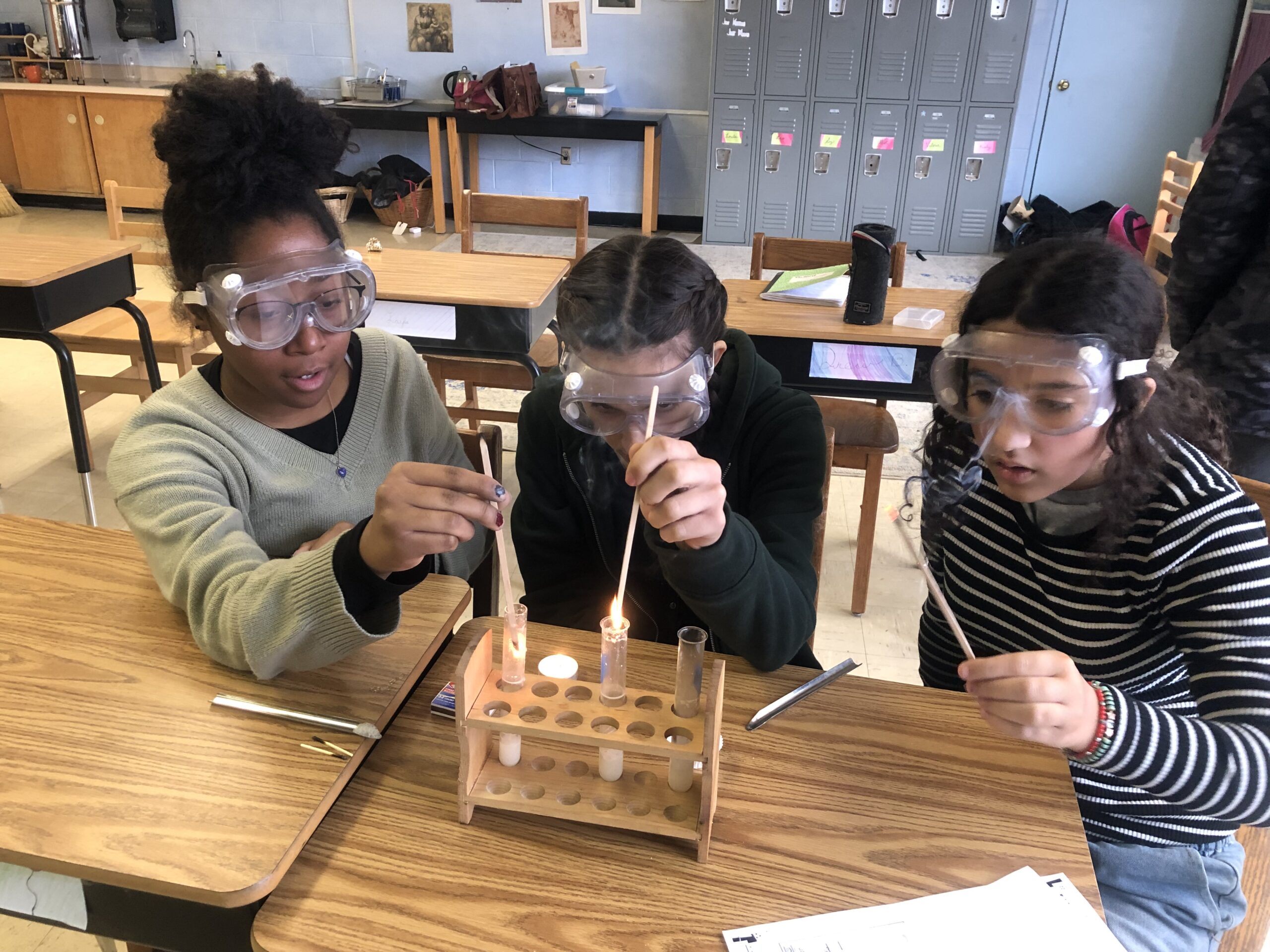
Kinesthetic: Movement games, drama, handwork, experiments, or practical activities that turn ideas into action
-
Reading/Writing: Student-created lesson books, journals, written summaries, and illustrated notes
Math might begin with rhythmic stepping or clapping (kinesthetic), then move into number lines or geometric drawings (visual), followed by written practice (reading/writing) and whole-class discussion (auditory).
A history block may open with a live-told narrative (auditory), expand into dramatization or reenactment (kinesthetic), continue with mapmaking or artwork (visual), and conclude with student summaries in their main lesson books (reading/writing).
Science may start with direct observation and hands-on experimentation (kinesthetic), then be captured through labeled drawings (visual) and written reflections (reading/writing), reinforced through classroom discussion (auditory).
This blending of modalities keeps students engaged and helps them build deep, lasting understanding.
Why This Matters
A multisensory curriculum does more than support comprehension — it supports the whole child. When lessons incorporate visual, auditory, reading/writing, and kinesthetic modes, every student finds a foothold. They feel seen. They feel capable. They experience “aha” moments that come from being taught in a way that speaks directly to them.
This approach also strengthens resilience. When children learn to approach material from many angles, they develop confidence: if one door doesn’t open, another often will. That flexibility becomes a lifelong skill.
When Additional Support is Needed
In the last few years, we as a school have recognized the need for additional Educational Support Services for our students. Through the work of Noelle Mckown, Literacy Support Specialist, and Elizabeth Atwell Brumley, Developmental Support Specialist, we are providing an additional lens of support to our students. For example, students who might be struggling with the decoding and encoding skills of literacy benefit from Literacy Skills class in 1st, 2nd, and 3rd grade, taught by Noelle, and may receive additional small group or one-on-one remediation. These additional layers of support do even more to benefit different types of learners.
Learning for the Whole Child
At Richmond Waldorf School, honoring the diversity of learning styles isn’t an add-on — it’s foundational. We design lessons that meet visual thinkers, active movers, deep listeners, and reflective writers. By doing so, we create classrooms where students feel supported, energized, and motivated to explore the world around them.
If you’d like to experience this approach in person, we welcome you to join us for a tour or upcoming event. There is nothing quite like seeing a child come alive through learning that truly meets them.
