Are Waldorf Academics Rigorous?
When families first discover Waldorf education, they often notice what feels different right away: the warmth of the classrooms, the beauty of student work, the time spent outdoors, the music, movement, handwork, painting, storytelling, and play.
And then there is the question, are Waldorf academics rigorous?
The answer is yes, but not quite in the narrow way rigor is often defined.
At Richmond Waldorf School, we believe truly rigorous academics should lead to more than high grades and strong test performance. A rigorous education should help students think deeply, ask meaningful questions, solve problems creatively, express themselves clearly, work with others, and carry their learning into the world with confidence.
In other words, rigor is not just about how much information a student can memorize. It is about what a student can understand, apply, create, explain, and become.

Beyond Test Scores
Standardized tests can offer one snapshot of a child’s learning, but they do not tell the whole story. A Harvard Achievement Gap Initiative report notes that while academic skills such as reading, computation, and reasoning are important, standardized test scores are “incomplete measures” of what students learn from their teachers. The report highlights engagement, mindsets, and agency as important developmental foundations for success in school and life. (Harvard Kennedy School)
That idea matters deeply to us.
A child may be able to recall facts for a test, but can they explain their thinking? Can they approach a problem from more than one angle? Can they revise their work? Can they listen to another perspective? Can they stay with a challenge long enough to discover something new?
Those are rigorous academic habits.
A recent Think Academy article makes a similar point, noting that traditional tests often emphasize memory and quick recall, while overlooking skills such as critical thinking, problem-solving, creativity, discussion, presentation, and the ability to apply knowledge in real-world contexts. (Think Academy)
These are exactly the kinds of capacities Waldorf education is designed to cultivate.
Depth Over Speed
In Waldorf education, students are not rushed through subjects simply to “cover” material. Instead, they are invited to enter deeply into what they study.
A history lesson may include biography, geography, literature, drawing, discussion, and writing. A science block may include observation, experimentation, careful illustration, and written reflection. Math is practiced not only through computation, but through rhythm, pattern, mental math, movement, practical application, and problem-solving.
This approach asks students to engage their whole selves. They are not passive recipients of information. They are active participants in their own learning.
That kind of depth takes time. It also builds stamina.
Students learn to observe carefully, organize their thoughts, create beautiful and accurate work, speak in front of peers, collaborate on projects, and develop the confidence to say, “I can work through this.”

Head, Heart, and Hands
At Richmond Waldorf School, academic rigor is woven through the Waldorf commitment to educating the head, heart, and hands.
The head is challenged through rich academic content, critical thinking, reading, writing, mathematics, science, history, and world languages.
The heart is engaged through story, music, drama, meaningful relationships, social-emotional learning, and a curriculum that helps students connect personally with what they are studying.
The hands are strengthened through handwork, woodworking, painting, gardening, movement, field trips, and practical experiences that bring learning into real life.
This integration does not make academics “less rigorous.” It makes learning more lasting.
When students knit, build, paint, garden, perform, hike, write, calculate, observe, and discuss, they are developing coordination, perseverance, executive function, creativity, focus, and flexible thinking. These are not extras. They are essential academic capacities.
Demonstrating Mastery in Many Ways
In a Waldorf classroom, students show what they know through far more than a worksheet or test.
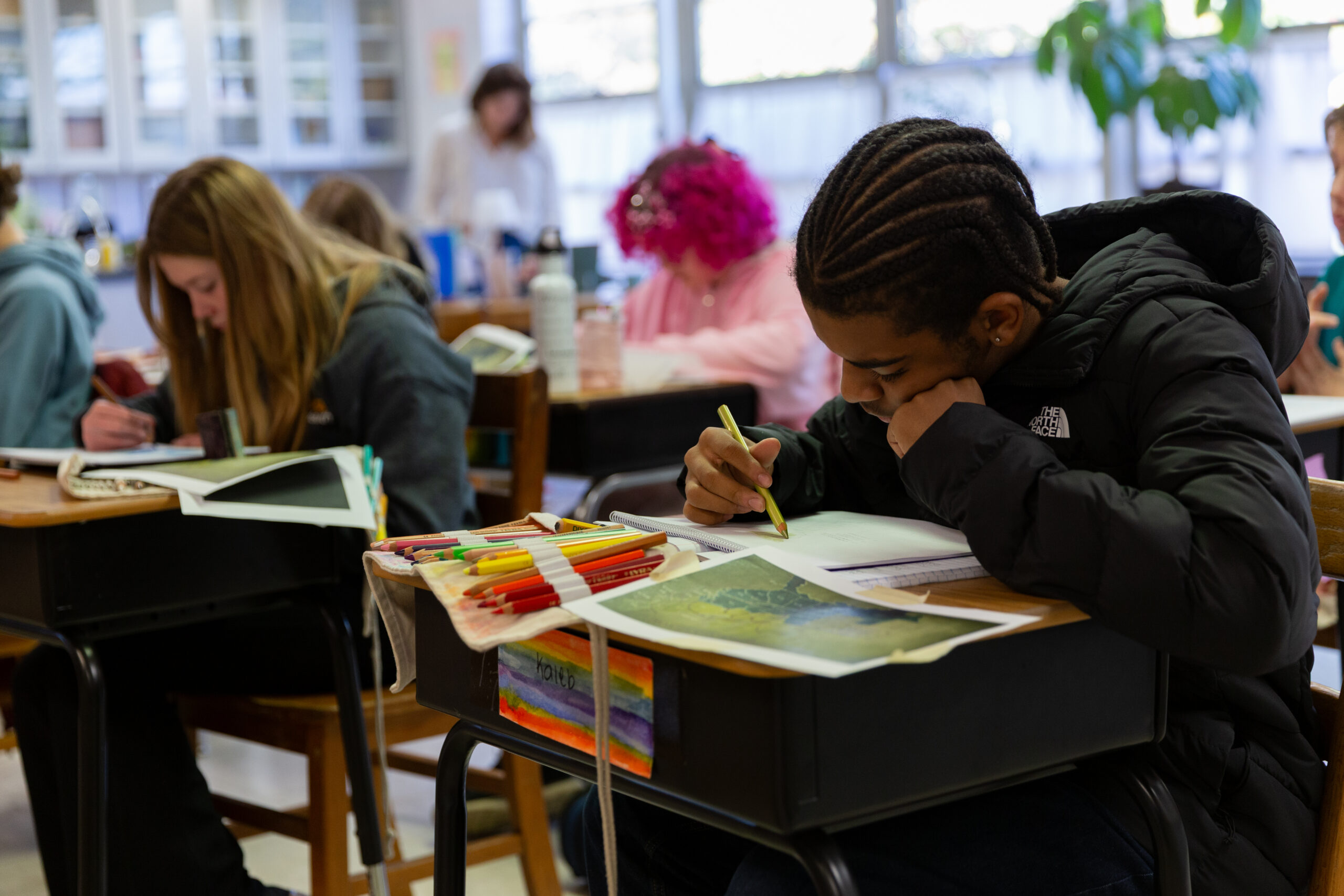
They write and illustrate their own main lesson books. They solve problems and explain their reasoning. They perform plays, recite poetry, conduct experiments, give presentations, participate in discussions, create projects, and reflect on their work over time.
This broader picture of assessment aligns with what many educators now recognize: students need multiple ways to demonstrate learning. Projects, portfolios, discussions, presentations, and performance tasks can reveal a fuller picture of what children understand and can do. (Think Academy)
At RWS, this means teachers know their students deeply. They see not only what a child can produce on a single day, but how that child grows across weeks, months, and years.
Preparing Students for the Future
The world our children are entering will require more than memorization. They will need to think creatively, communicate clearly, collaborate across differences, adapt to change, and approach complex problems with curiosity and resilience.
That is why Waldorf education feels so relevant today.
Our curriculum challenges students to think across subjects, develop social-emotional intelligence, hone adaptability, express and defend their ideas, and demonstrate mastery in meaningful ways. Students are asked not only to know the answer, but to understand the question. Not only to complete the assignment, but to take pride in the work. Not only to succeed individually, but to contribute to a classroom community.
That is academic rigor with purpose.
So is a Waldorf education rigorous?
Yes.
It is rigorous because it asks students to think deeply.
It is rigorous because it require creativity, discipline, focus, and perseverance.
It is rigorous because students must engage not only with facts, but with ideas.
It is rigorous because children are known, challenged, and supported as whole human beings.
At Richmond Waldorf School, we believe education should prepare students not just for the next test, but for the next stage of life. Our graduates leave with strong academic foundations, a love of learning, and the confidence to meet the world with curiosity, courage, and purpose.
Schedule a tour or connect with our Enrollment Director, Alexandra Mazeres, to learn more about Richmond Waldorf School. Click on our “Visit Us” page www.richmondwaldorf.com/visit-us to sign up for a tour or call us at 804-377-8024 ext 3.
